Diagrams&Stack
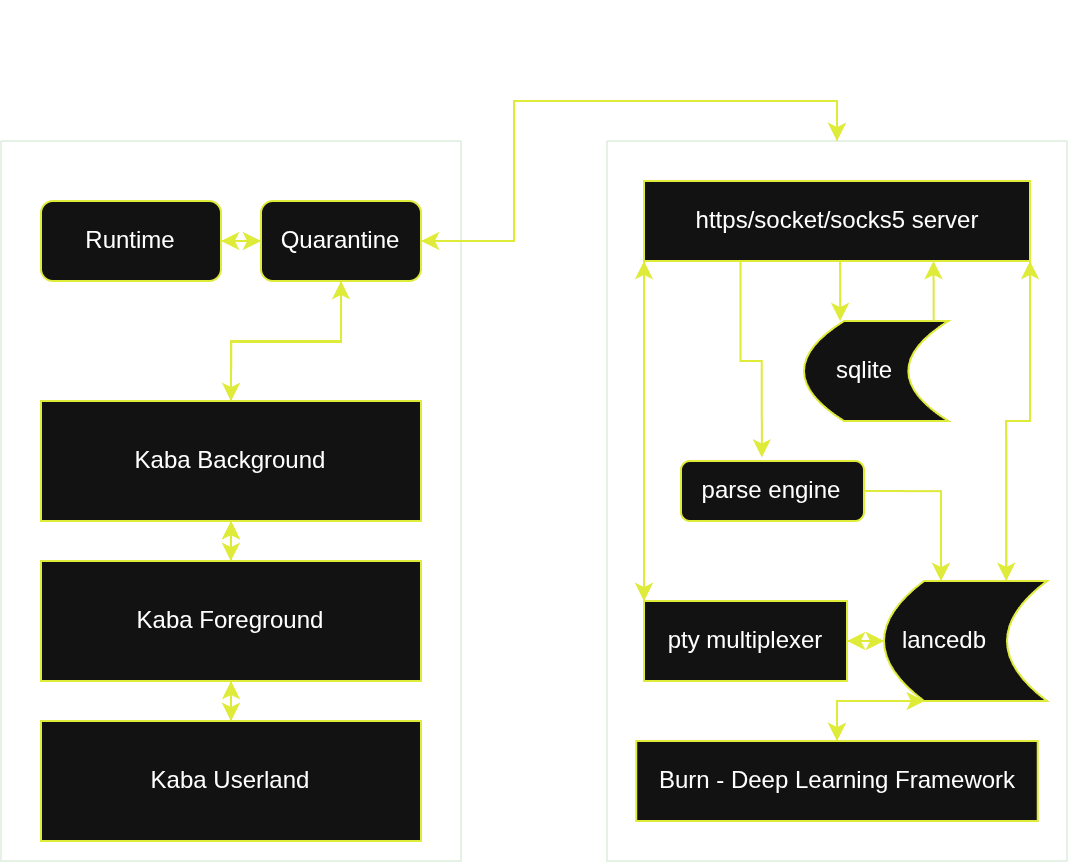
Kaba is a harness and a lab that run on hardware you own. The harness is where work happens: browser, terminal, files and models in one window. The lab is what it learns from: memory, datasets and training. A mesh joins your devices, and policy checks every model-driven step before it runs.
Kaba Console (kaba)
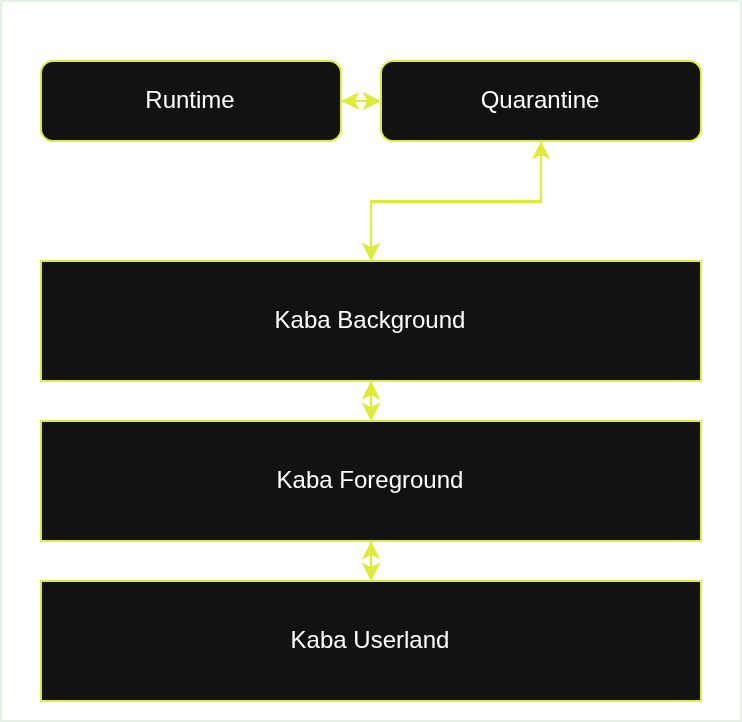
Section titled “Kaba Console (kaba)”The desktop client. It draws the window, hosts every pane, applies the privacy layer to web traffic, and provides the built-in apps. It starts the engine and talks to it over a local HTTPS connection.
- Shell: the Kaba bar, frames, tiling panes, omnibar.
- Apps: desktop, terminal, files, Hippocampus, settings, Projects, Toolbench.
- Tool loop: the bounded, policy-checked loop that lets a model use tools in the same panes you do.
- Javascript
- Rust
- C++
Kaba Control (kabactl)
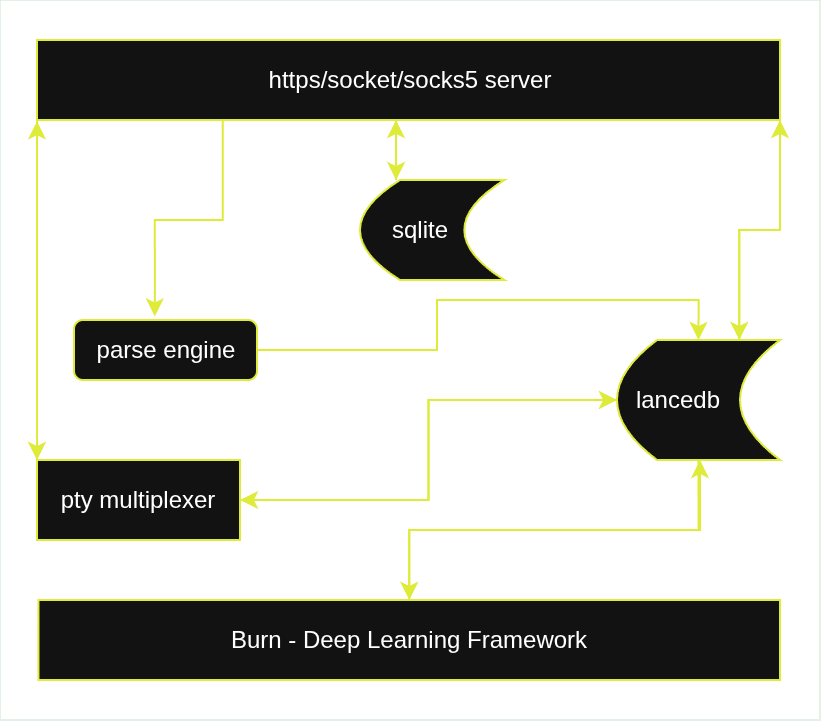
Section titled “Kaba Control (kabactl)”The engine. One binary that serves the local API and proxy, stores memories, runs models and training, and connects your devices. It runs under the client on a desktop, or alone on a server, in a container or on Kubernetes.
- API and proxy: HTTPS on
28832, SOCKS5 on28833. - Memory: an encrypted vector store per account.
- Models: inference, adapters and LoRA training.
- Mesh: peers, sync, remote terminals and files, exit nodes.
- Sandbox: containers for anything a model wants to execute.
- Rust
Mentions
Section titled “Mentions”- Burn - Tensor Library and Deep Learning Framework
- Iroh - IP addresses break, dial keys instead. Modular networking stack in Rust.
[todo: confirm the three architecture diagrams still match kaba 0.146 / kabactl 0.87; the draw.io sources are in src/assets/architecture.]